
Last month’s article covered the initial organization of the double company that led to the authorization of a full battalion to be raised from Ontario County. Major Samuel S. Sharpe of Uxbridge was promoted to Lieutenant Colonel and named as the commanding officer in November 1915.
Organization
Headquarters for the 116th Battalion was established at Uxbridge, along with “A” Company. There was a detached platoon in Port Perry that was part of “A” Company. “B” Company was headquartered in Beaverton, with a detached platoon in Cannington. “C” Company was in Whitby and “D” Company in Oshawa. Lieutenant Colonel Sharpe quickly put together the senior officer staff. The Battalion’s senior major was Major Robert B. Smith, a long-time member of the 34th Ontario Regiment. Captain Carson A.V. McCormack was named as the junior major. Captain Arthur W. McConnell was the adjutant and Captain James Moore from the 34th Ontario Regiment was the medical officer.
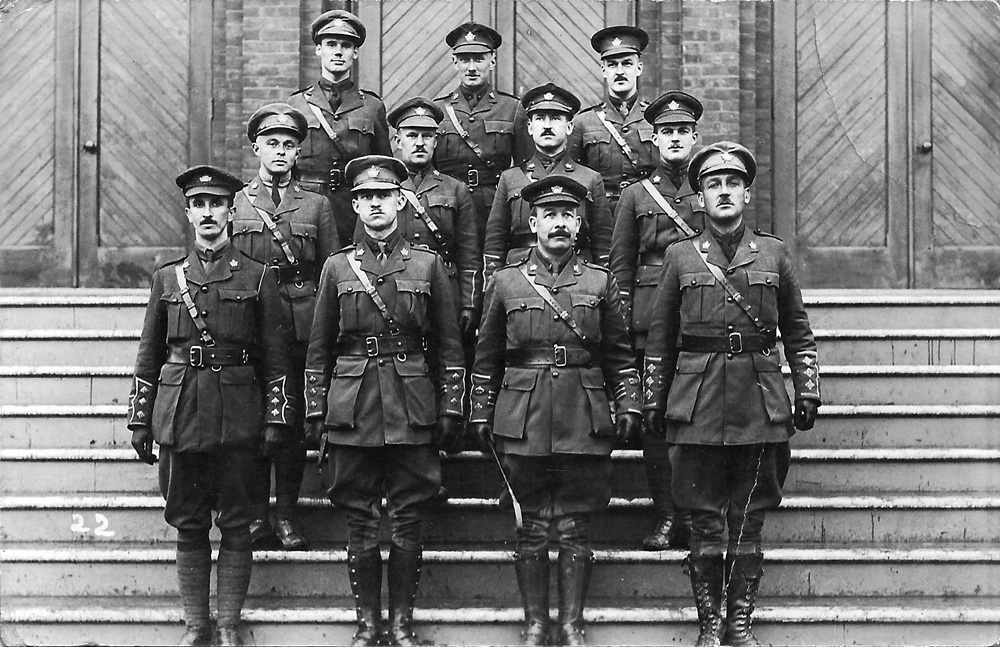
Top row: Lieutenant Jack Lester, Lieutenant Thomas Hutchison, Lieutenant Harold Gould
Middle: Lieutenant Roy Atkinson, Lieutenant Joe Hughes, Lieutenant Gilfillan, Lieutenant Ross Cockburn
Front: Captain Wilson, Captain Wesley McConnell, Lieutenant Colonel Samuel Sharpe, Captain Herbert Cooke
Accommodation for the soldiers was an early priority. The Oshawa Armoury could not be used as it was already allocated as the winter quarters of two companies of the 84th Battalion. It would appear that no other building could be found. A call for billets was put out to the citizens of Ontario County in the communities that hosted elements of the Battalion. The rate for board was $4.50 per week to be paid by the Battalion for anyone offering to billet soldiers.
The Whitby Armoury was the headquarters for “C” Company. This building was originally the home of the Whitby Steam Marble Works, manufacturers of marble headstones, and converted for use as the headquarters of the 34th Ontario Regiment beginning in 1902. It was located on the south side of Dundas Street, between Brock Street and Garden Street. The second floor of the Whitby Armoury was renovated and refurnished as a club room for the men of the Whitby Company. Steam heating and showers were installed and a billiard room was also provided.
Recruiting
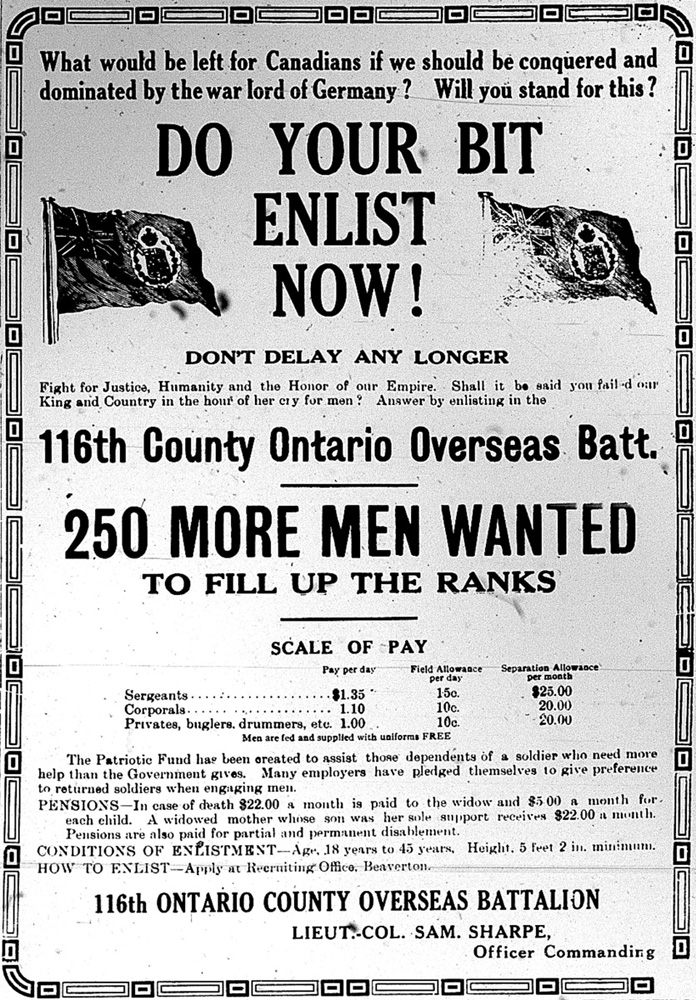
A Citizens’ Recruiting Committee was formed in November which consisted of prominent men from each area of Ontario County. The co-presidents were Judge T.A. McGillivray, a retired major and former second-in-command of the 34th Ontario Regiment, and Judge McIntyre. It also included former 34th Ontario Regiment commanding officers Colonel J.E. Farewell and Lieutenant-Colonel J.F. Grierson, along with Honorary Lieutenant-Colonel W.J. Cowan.
The committee approached the Ontario County Council in November for financial assistance to cover some of the recruiting costs and to purchase some items that the government would not normally issue. The council quickly voted to approve a grant of $5,000. Of this sum, $2,000 was allocated for regimental funds and $3,000 to assist with recruiting.
The organization of both a brass band and bugle band was initiated in November 1915. Bugle Master William Templeman led the bugle band while the brass band was led by Bandmaster Alfred Graves. These bands will be the topic of a future article.
Regular recruiting meetings began in November. The members of the Recruiting Committee spoke at each meeting along with Lieutenant-Colonel Sharpe and other Battalion officers. Former commanding officer of the 34th Ontario Regiment Colonel A.G. Henderson was an active participant as well. Colonel Henderson was attached to the 116th Battalion on the reserve list of officers. He was a forceful and entertaining speaker and quickly became one of the most popular speech-makers. A newspaper article referred to his “well-known racy but forceful manner”. In addition to the regular speakers, guest speakers were brought in, such as returned soldiers from Ontario County who had already seen combat in France. The speeches typically appealed to the patriotism, honour and obligation of the young men of the county. Bands were on the program and movies were shown at some meetings. The meetings were held throughout Ontario County with Colonel Henderson being the most prolific speaker. The ministers of the local churches were implored to make recruiting a part of their weekly sermons. At least one meeting included demonstrations by the machine gun section and the signaling section.
Toward the end of March recruiting was slowing down and getting the final 50 soldiers was proving difficult. An Ontario Reformer article from late March 1916 stated that the men of “D” Company in Oshawa were frustrated by the sight of, “hundreds of young fellows physically fit, dodging around pool rooms and picture shows”. Letters were sent to 200 young men who had not yet joined up and invited them to meet with the recruiting officers on a specific date. Only one man appeared and he was afflicted with rheumatic gout. The men of “D” Company took it upon themselves to do their own recruiting. Some of them walked the streets and confronted every young man they found and according to the article, told these men that, “there were only two places for a man to be found now, either at home with his mother or at the recruiting office”. Apparently, this approach had some success because 25 new recruits were found.
Community Support
Support from the residents and businesses in Ontario County began immediately after the authorization of the creation of the 116th Battalion. There were numerous concerts throughout the County that raised money for the battalion.
Mr. Purdy offered part of his store in Port Perry for use as a recreation room for the soldiers. There was a request for games, magazines, etc to stock the room.
In April Lieutenant-Colonel Sharpe purchased four knitting machines at a cost of $20 each and provided them to the Patriotic Societies in each of the towns with a company headquarters. The machines could knit a pair of socks in 20 minutes. Some of the women of Oshawa formed the 116th Battalion Knitting Society to put the new machines to work.
The Beale brothers of Toronto, formerly residents of Uxbridge, donated a field kitchen and harnesses, valued at $550, to the Battalion. The presentation took place in Uxbridge on 24 April 1916, enabling the Battalion to cook its own meals for the County March that took place in May.
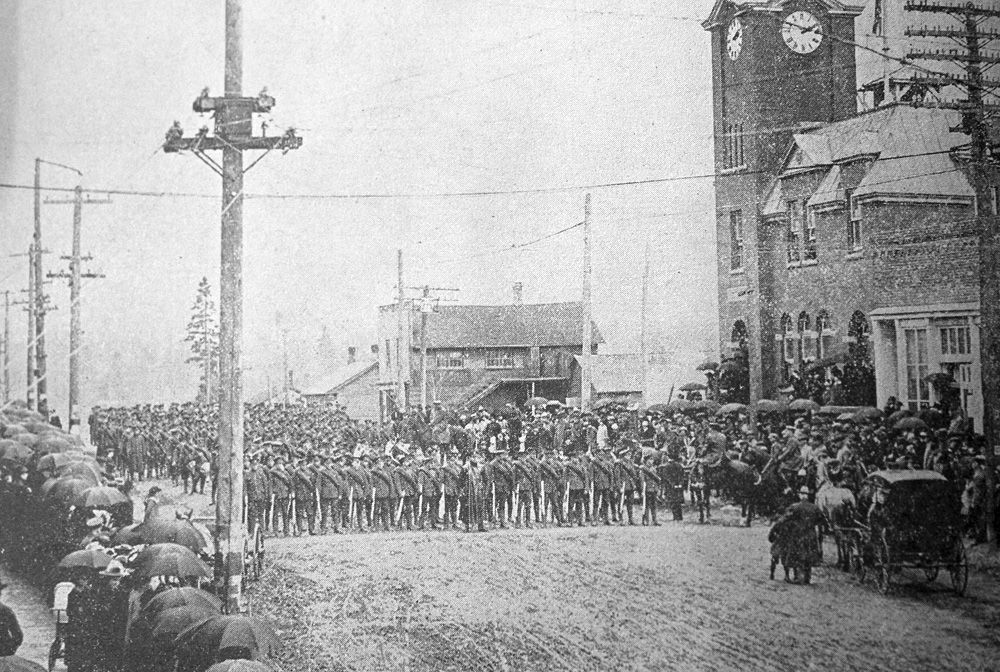
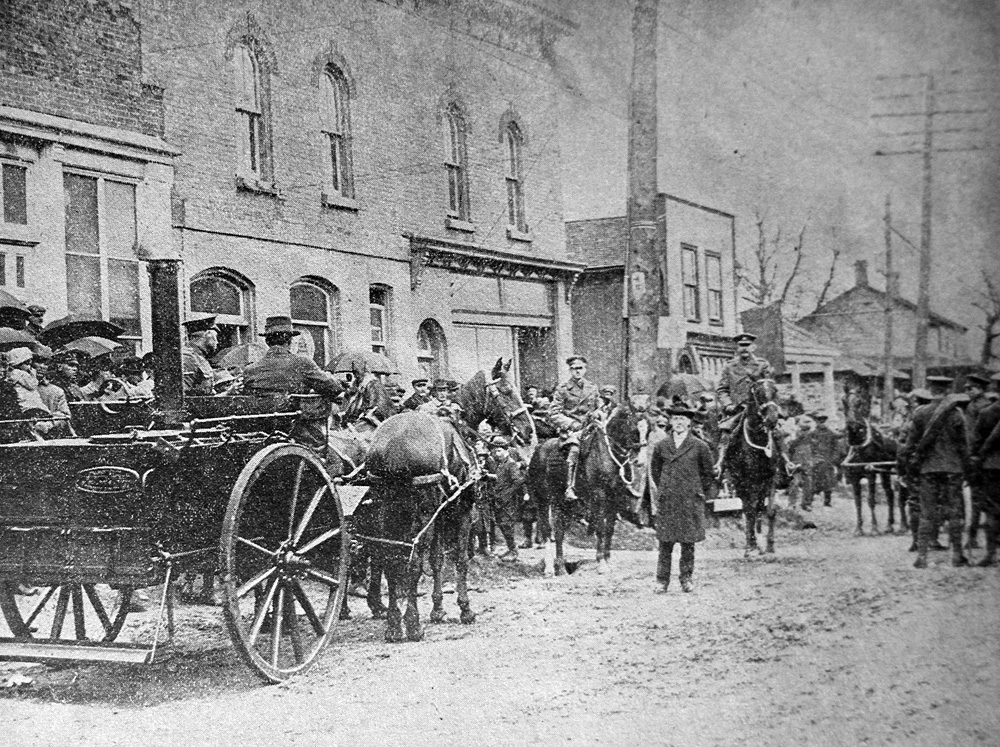
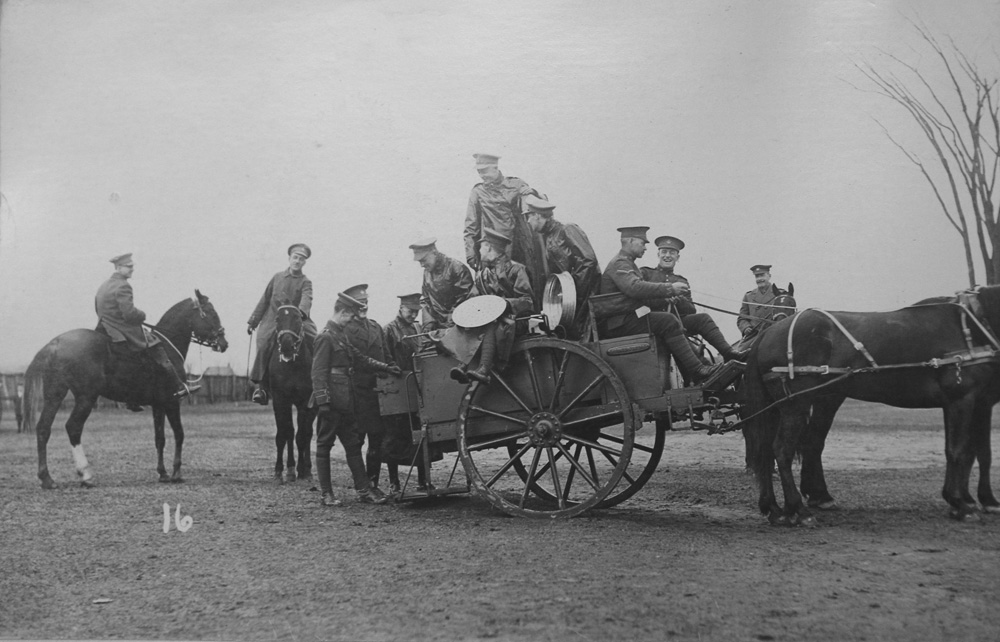
Another field kitchen was required, which led to a Field Kitchen Fund being set up in April. This second field kitchen was purchased with funds donated by citizens of Ontario County and delivered in time to be presented to the Battalion during the County March in May.
The training did not wait until all the organizational work and recruiting was complete. Men were being trained as soon as they joined the 116th Battalion. Next month’s article will cover this and more of the early days of the 116th Battalion.
Rod Henderson is the Regimental Historian of the Ontario Regiment. He served as a Sergeant in the Regiment and is the author of “Fidelis Et Paratus: A History of The Ontario Regiment (RCAC), 1866-2016”.