

The 116th Battalion spent most of May 1916 conducting a march through Ontario County. The County March, as it became known, was covered in detail here: https://tankmuseum.ca/blog-post/the-county-march/ and a photo album here: https://tankmuseum.ca/blog-post/116th-battalion-county-march-photo-album/.
The County March ended on 27 May in Oshawa, where the Battalion stayed for a few days. On 30 May they marched to the Whitby harbour where they boarded the steamer Chippewa which carried them across Lake Ontario to Camp Niagara, where final training was to take place before going overseas. Camp Niagara had been the location of Militia training for many decades prior to the First World War.
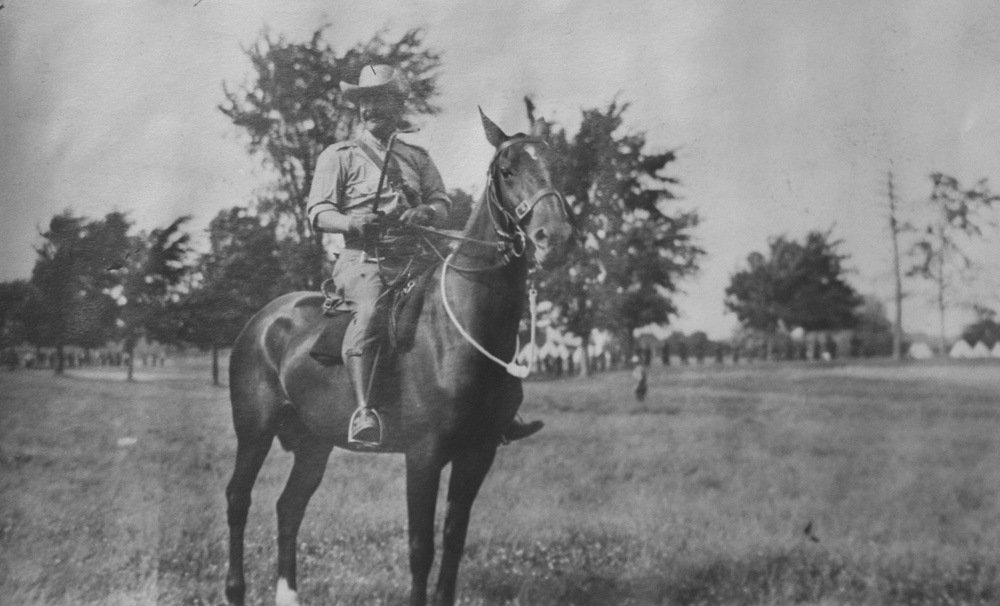
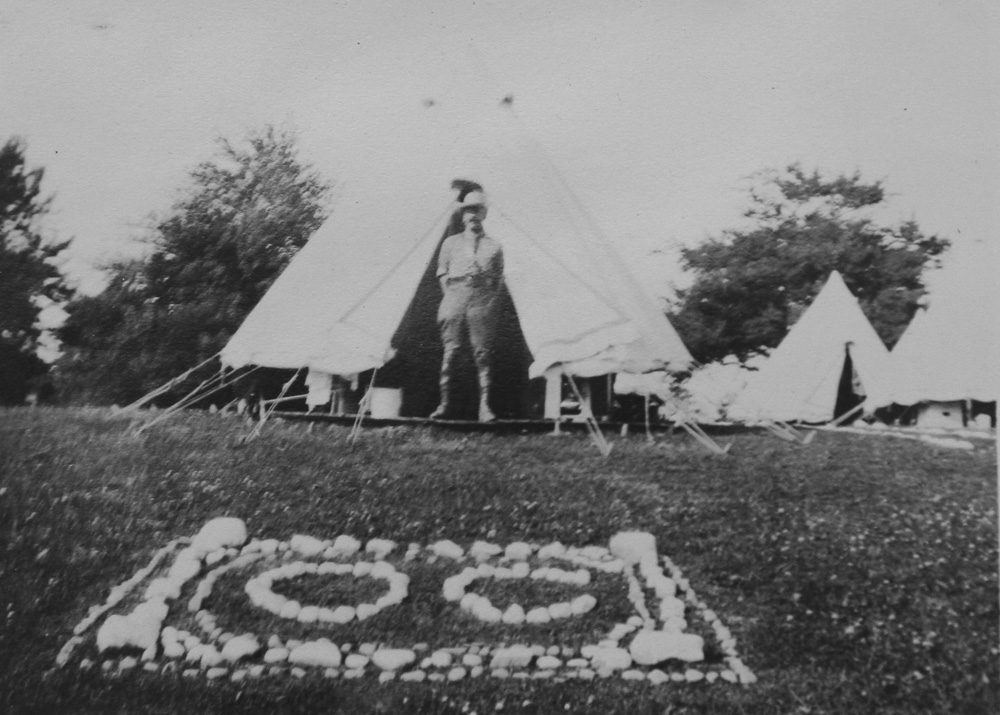
The troops were housed in eight-man bell tents at Camp Niagara. Sundays were a day off for most of the soldiers with a church parade in the morning and soccer and baseball in the afternoon. There is very little information available regarding the type of training that the soldiers were involved in. Newspaper reports make several references to route marches, as it appears to have been a common event. Once such route march turned tragic in early June. The troops stopped for lunch at Queenston Heights when a thunderstorm rolled in. A lightning bolt struck the group, killing a soldier from the 169th Battalion and injuring about 70 others, including men from the 116th Battalion. Courses were held that covered trench warfare, musketry and officer’s training. Basic rifle shooting was conducted at the range. The 116th Battalion baseball team lost to the 169th Battalion in the Camp Niagara championships.

The Mabel Sharpe scrapbook, Canadian War Museum
The 116th Battalion, and the whole Niagara camp, were inspected twice. The Duke of Connaught, then the Governor-General of Canada, inspected 13,000 troops on 18 June. Three days later the camp was inspected by the Minister of Militia, Sir Sam Hughes.
There were some social events in addition to the training. Lieutenant Colonel S.S. Sharpe’s wife Mabel was staying at the nearby Queen’s Royal Hotel. She hosted a dinner party just before the Battalion left the camp. The dinner was in honour of two officers and their new brides: Major Robert Smith and his bride Mary, along with Lieutenant Thomas Hutchison and his new wife Muriel. The Battalion hosted friends and family on 5 July. Two previous articles covered this day, part 1: https://tankmuseum.ca/blog-post/july-1916-a-visit-to-camp-niagara-part-1/ and part 2: https://tankmuseum.ca/blog-post/july-1916-a-visit-to-camp-niagara-part-2/. The officers of the Battalion and their wives attended a garden party hosted by Ontario Lieutenant Governor Sir John Hendrie and his wife Lady Hendrie on 15 July.
The Mabel Sharpe scrapbook, Canadian War Museum
The 116th had barely settled into Camp Niagara when they were warned for overseas service in mid-June. Final leaves were hastily arranged, with half of the Battalion on leave during the third week of June and the other half during the final week of the month. Any training that was taking place would have been interrupted by these leaves and by the preparations for moving overseas.

The Mabel Sharpe scrapbook, Canadian War Museum
The soldiers were subjected to another round of medical exams, resulting in the discharge of about 100 men. This led to a final call for more recruits and for a draft from Ontario County’s other battalion, the 182nd. Only about half of these men passed their medicals.
Battalion Sergeant Major William Hole was replaced in the final days at Niagara by Fred Palmer. The inspection report recorded that Hole did not have the qualifications to be the BSM. This transition is described in the biography of BSM Fred Palmer here: https://tankmuseum.ca/blog-post/bsm-fred-palmer/. A biography of BSM William Hole is here: https://tankmuseum.ca/blog-post/116th-battalion-sergeants-major-1-william-hole/.
The Mabel Sharpe scrapbook, Canadian War Museum
A written inspection report was produced in mid-July, signed by Major General F.L. Lessard. The report noted that Lieutenant Colonel Sharpe was “a fairly good C.O.” and that he was “keen and willing”. Other senior officers in the Battalion were also praised, with Major Robert Smith described as “popular and with more infantry experience will prove to be a capable officer” and Major Carson McCormack as “keen, enthusiastic and well fitted for his present position.” The other officers were ranked as a group, with the report stating they were “all energetic, keen”. Warrant officers, sergeants and the other ranks were described as “a good all round lot”. These assessments were about as good as it got in this era. The report concluded with some general observations. It stated that the 116th was “on the whole a fairly good Batt.” There was some concern as some of the men, “seem to be under-size and not physically fit.”

The Mabel Sharpe scrapbook, Canadian War Museum
The Battalion, with a strength of 36 officers and 943 other ranks, was loaded onto two special Grand Trunk Railway trains of 12 cars each on 20 July. They traveled to Halifax, only stopping twice for route marches, and arrived on 23 July. The 116th Battalion boarded HM Troopship Olympic. The Olympic, formerly RMS Olympic, was a sister-ship of RMS Titanic and had been pressed into service as a troopship for the duration of the war. The Olympic pulled out of Halifax harbour at noon on 24 July, destined for England and the next phase of their preparation for the trenches of the Western Front.
Rod Henderson is the Regimental Historian of the Ontario Regiment. He served as a Sergeant in the Regiment and is the author of “Fidelis Et Paratus: A History of The Ontario Regiment (RCAC), 1866-2016”.