
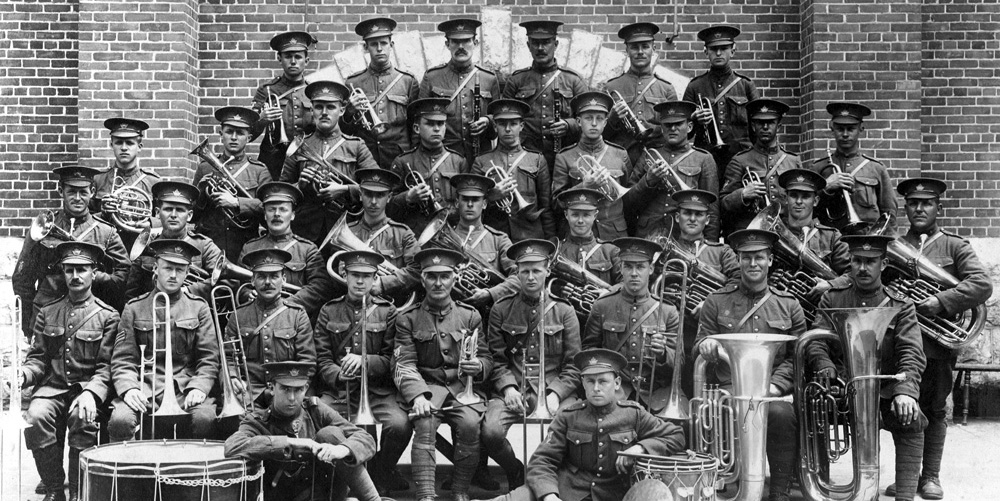
The previous three articles covered the formation and initial training of the 116th Battalion. One of the early priorities for the Battalion’s commanding officer, Lieutenant Colonel Samuel Sharpe, was to form both a bugle band and a brass band. This may seem like an unusual priority, but military bands were in a prominent role in this era. Bands were used in recruiting, entertaining the soldiers, and connecting with the community.
An article appeared in the Whitby Chronicle on 18 November 1915 indicating that the Battalion was forming both bands. Interested musicians were instructed to contact Lieutenant Colonel Sharpe “with their qualifications at once”. The bands were part of Headquarters Company and were stationed in Uxbridge. Instruments were donated by Ontario County.
The photo below shows the members of the brass band in front of the Oshawa Armoury.
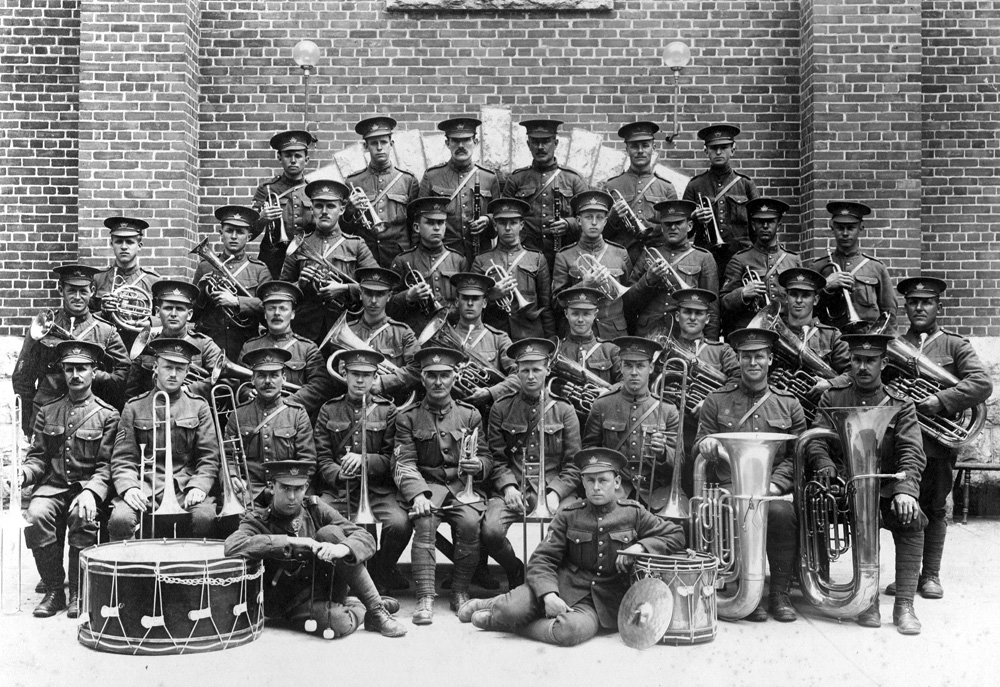
Top row: Leonard Crawford (assistant bandmaster), Lance Corporal Frank Oliffe, George Wallis, H. Wilmott, Fred Wadsworth, David Bottomley
Second row: Clarence Jones, Frank Crawford, Samuel McCully, Archibald Napier, Arthur Groves, Elwood Brandon, G. Gitttings, Albert Smith, Harry Stone
Third row: John Wright, William McCully, Alfred Martyn, William Alford, Albert Hudson, Gordon Luxton, Robert Stovin, Walter Alford, William Culling
Fourth row: Charles Kingston, Ernest Nutting, John Beever, Hubert Barker, Alfred Graves (bandmaster), Ralph Gould, H Allin, Thomas Rutherford, Stephen Butler
Sitting: Edward Bath, Richard Burnside
Missing: Harold Anderson
Many of the brass band members were well known from their time as members of local bands.
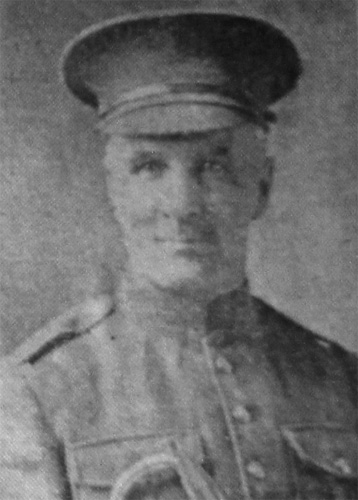
Alfred Graves had been a bandmaster for the previous 13 years, including stints with the Uxbridge Salvation Army Band, the South Northwood Band and the Oshawa Band. Earlier in his career he was the band sergeant for the Salvation Army bands in Luton Temple, Watford, Canning Town, and Sutton (all in the UK). Graves was born on 1 June 1871 in Cranworth, England. He was not a full-time musician as his attestation paper indicates he was a building contractor.
The members of the Bugle Band as listed in a newspaper article from the summer of 1916:
Walter Arkwright
Forrest Baker
Arthur Coppin
Edward Gibbie
Victor Gower
Walter Matthews
Keith Parks
Edwin Pearson
Vincent Spratt
Percy Stacey
Alexander Walker
James Wilbur
Stanley York
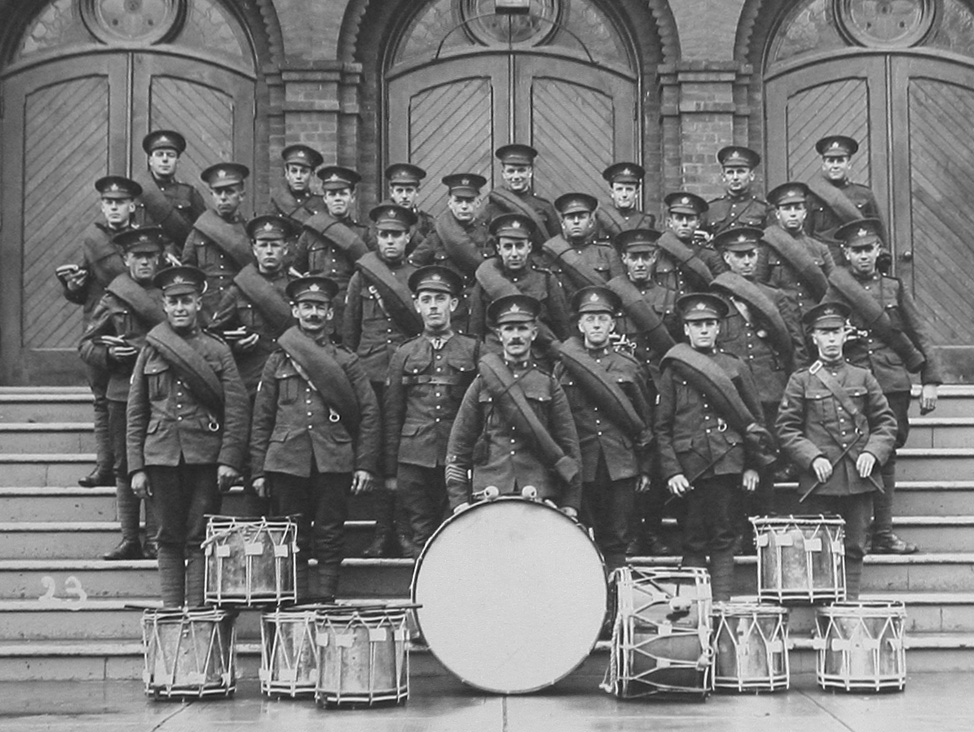
This is not a complete list as evidenced by the photo of the Bugle Band with many more members than listed above. Missing from this list is William Templeman, the original Bugle Master.
Edwin Pearson, listed above, was one of the original members of the bugle band. He left the buglers at one point and rose to the rank of sergeant. In August 1918 he was commissioned as a lieutenant and returned to the 116th Battalion for the final weeks of the war. Pearson joined the Ontario Regiment in 1920 as a lieutenant and continued his progression, eventually becoming the commanding officer of the Regiment in 1936. He held that position until 1940 and was instrumental in the mobilization, early recruiting, organizing, and training of the Ontario Regiment after the outbreak of the Second World War on 1 September 1939.
The bands were formed and ready to perform by late winter. The Port Perry Star noted on 1 March 1916:
“The Battalion Band music brightens the days. The martial airs put life into the people and add interest to the movements that have always had many spectators.”
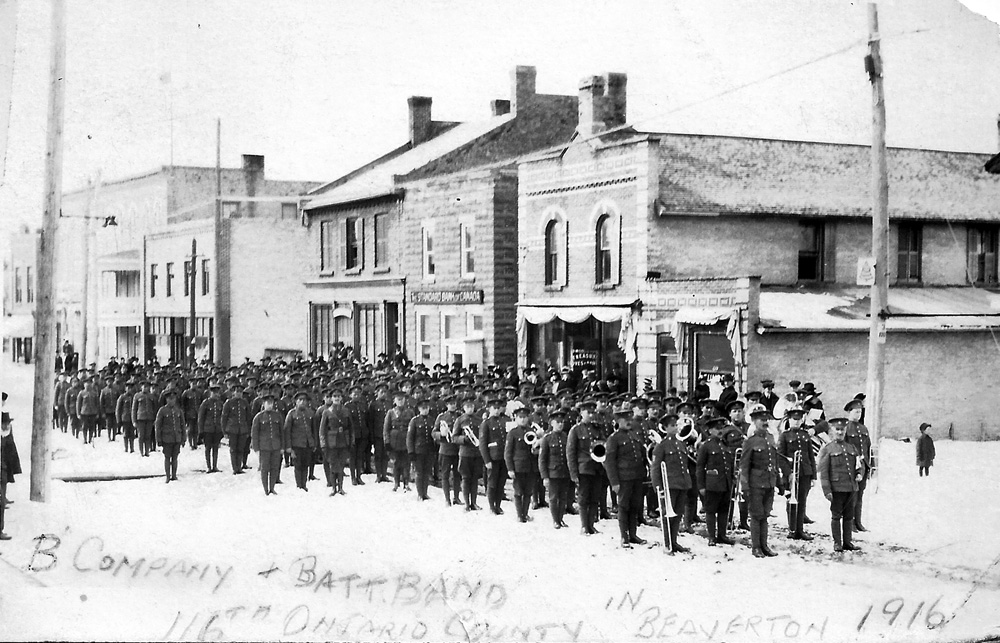
The bands continued to appear at recruiting events and entertain with concerts (that were thinly disguised recruiting events). Both bands were key elements of the Battalion’s County March in May 1916. This event was described here: https://tankmuseum.ca/blog-post/the-county-march/. The bands are seen marching with the troops in numerous photos. Newspaper articles noted the appearance of the bands at the various events that were part of the County March.
Following the completion of the County March in late May, the 116th Battalion left Oshawa (the final destination of the March) and journeyed to Camp Niagara for the next phase of their training. The newspapers did not provide much coverage of the Battalion’s time at Niagara and there was very little mention of the bands. If the pattern of pre-war Militia camps was followed then the bands would have been busy each day. They would have taken a turn as the camp duty band. When not performing camp duties, the bands would have played for the Battalion throughout the day.
The 116th Battalion spent a shorter time at Camp Niagara than other battalions. On 20 July 1916 the men of the 116th boarded trains bound for Halifax where they embarked on HM Troopship Olympic, arriving at Liverpool on 31 July. There were no newspaper reports that mention the bands during the Atlantic crossing. It is highly likely that they would have played regular concerts while onboard.
The bands made such an impression upon arriving at Liverpool that Lieutenant Colonel Sharpe included a description of the scene in an update letter to Ontario County newspapers. Sharpe explained it as follows:
“The English regiments have no such bands, and our musicians created a sensation on the docks at Liverpool. The Embarkation Officer pleaded to have our two bands play up in the station, near where the crowds were kept back by policemen, so that they could hear their fine military airs. The bugle band especially pleased them, and Giffin, our bugle drummer, made a hit.”
Again, there was almost no newspaper coverage of the Battalion’s bands during the period of training in England. It would be safe to assume that their duties would have been similar to the time at Camp Niagara.
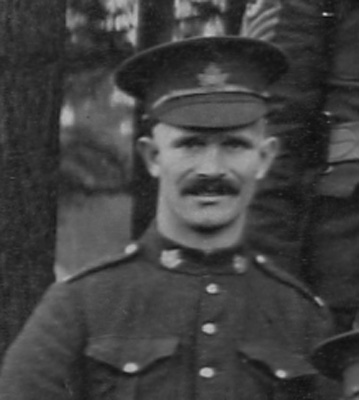
The personnel changes in the bands are not well documented. Alfred Graves appears to have been bandmaster until January 1917. He left the 116th Battalion at this time and was discharged as being over-age in July. He was followed by Sergeant Leonard Crawford, but his time as bandmaster was short. In early March 1917 he was marching with the Battalion to an inspection by the commander of the 9th Brigade when he fell on an icy road and injured himself. He was invalided to Canada. By December of 1917 Sergeant Harold Bromby was the bandmaster and remained with the 116th Battalion under the end of the war. Regarding the bugle band, Bugle Master William Templeman stayed with the 116th Battalion for the duration of his service so it is possible that he was their only leader.
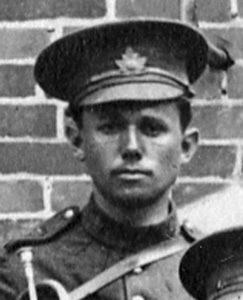
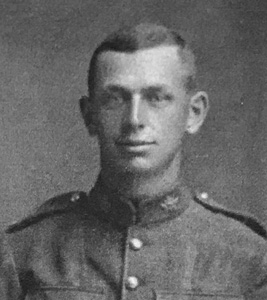
The bands’ musical duties were not over when the Battalion arrived in France. The war diary notes a few occasions when they played music as the troops left their billets to march back to the trenches. Canadian Expeditionary Force band members were typically used to augment the stretcher bearers during times of combat. The Battalion’s casualties were so heavy during the battle of St. Olle in late September and early October 1918 that the band members were called in to fight as riflemen. The brass band was on hand in Mons on 11 November 1918 as part of the celebrations for the liberation of the city and the end of the war. There were concerts for the troops following the Armistice.
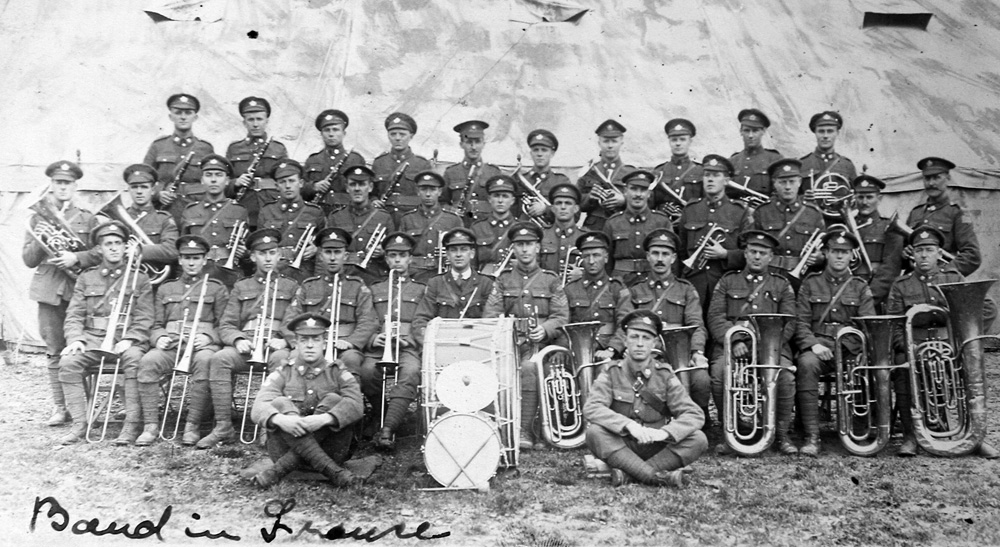
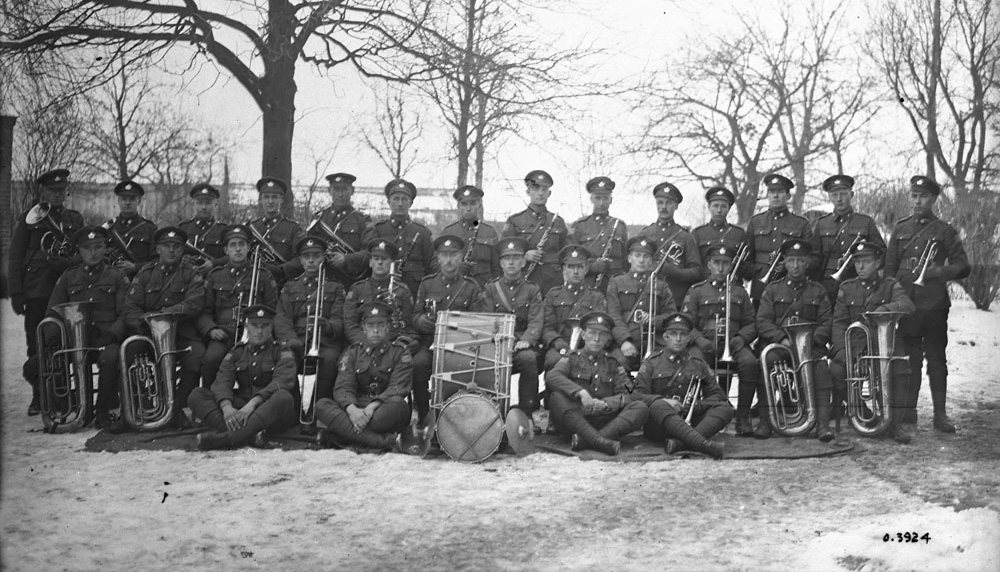
The bands had one more duty before demobilization. The 116th Battalion arrived in Oshawa on 29 March 1919 and the bands marched with the Battalion from the train station to the Oshawa Armoury. After some discussion following demobilization, the final decision was to give the band instruments to the band members.
Rod Henderson is the Regimental Historian of the Ontario Regiment. He served as a Sergeant in the Regiment and is the author of “Fidelis Et Paratus: A History of The Ontario Regiment (RCAC), 1866-2016”.