
Part 1 of this series is here: https://tankmuseum.ca/blog-post/the-116th-battalion-in-england-part-1/
Rumours, Drafts, Morale, and Entertainment
The soldiers of the 116th Battalion were worried that they would suffer the fate of most of the battalions in the preceding months. The pattern was becoming clear: a battalion would be raised in Canada, sail to England, and then be broken up for reinforcements to the battalions in France soon after. There was guarded optimism that the 116th would be the exception.
This optimism was tested several times while the Battalion was in England. The first test came in late August 1916 when six lieutenants were sent to the 75th Battalion, which was deploying to France. Five more lieutenants followed soon after. In the autumn another 90 men were sent to the 18th Battalion, 90 to the 19th Battalion and 300 to the 2nd Battalion. To restore its strength, the 116th received 350 men from the 126th Battalion and 200 from the 135th Battalion. The 126th Battalion had been recruited in Peel County, west side of Toronto. The men of the 135th Battalion came from the London, Ontario area. The Battalion’s morale was a roller coaster during this time. At each outgoing draft the morale dropped and rumours spread as it seemed it was a sign that the Battalion would be broken up. Within days, an incoming replenishment draft restored the confidence of the soldiers.
Sports play a large role in the training and morale of military life. A letter from an unknown soldier to the Whitby Gazette and Chronicle described a brigade sports day. One event was for musicians in which each competitor ran 50 yards while playing a musical instrument. It was won by the 116th Battalion’s own Bandmaster Alfred Graves. There was also a 200 yard mule race and two-hour route march with full equipment. The letter writer proudly noted that no man of the 116th fell out of the route march. The Brigadier presented the 116th Battalion with a goat as a mascot, another sign that the Battalion would remain intact. Little else is known of the goat. A small item in the newspaper noted that many of the soldiers had written home for their lacrosse sticks to be sent to them. Baseball was also popular.
On 7 October the Battalion deposited its Colours in London’s Westminster Abbey. This event will be covered in the October 2026 article. It was seen as evidence that the Battalion would go to France intact.
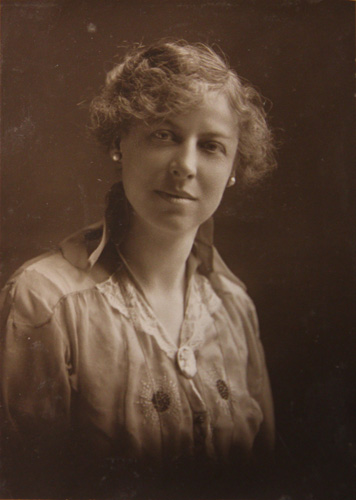
Mabel Sharpe, wife of Lieutenant Colonel Sam Sharpe arrived in England at some point that summer and took up residence in a boarding house close to Bramshott Camp. She spent time reading to soldiers in the hospital and organizing entertainment. Nightly entertainment was also provided by the YMCA.
A recreation room was available to the men. Honourary Captain John Garbutt, the Battalion’s chaplain, wrote to his friend Reverend Fraser describing the facility: “We have writing tables, games of nearly all kinds, some papers and magazines, also a library of over 100 volumes…”. There was also a rented piano and a billiard table. The chaplain made regular visits to the men in hospital and brought some of these books for them. He did whatever he could to make the sick soldiers as comfortable as possible by securing writing paper and envelopes, tobacco, cigarettes, and chocolate. He also arranged passes for their fellow soldiers to visit them. Many of these items were purchased with funds donated by the citizens of Ontario County.
The support that the 116th Battalion received from the residents of Ontario County continued while the Battalion was in England. Over a thousand pairs of socks were sent to the men.
Witley Camp
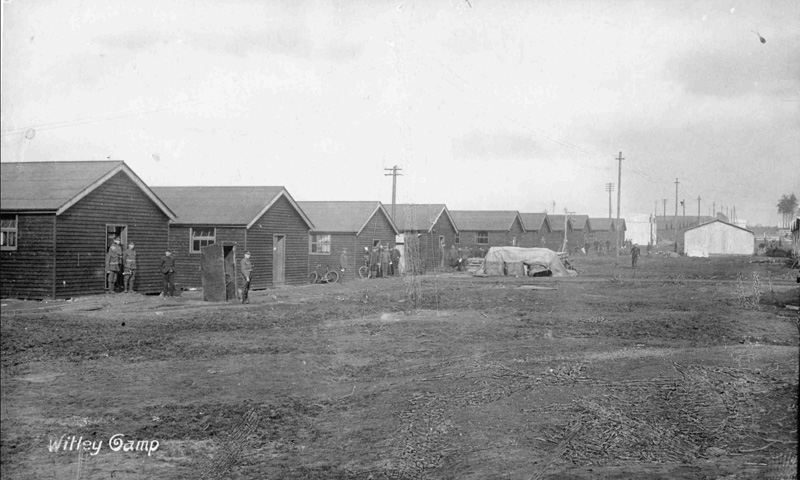
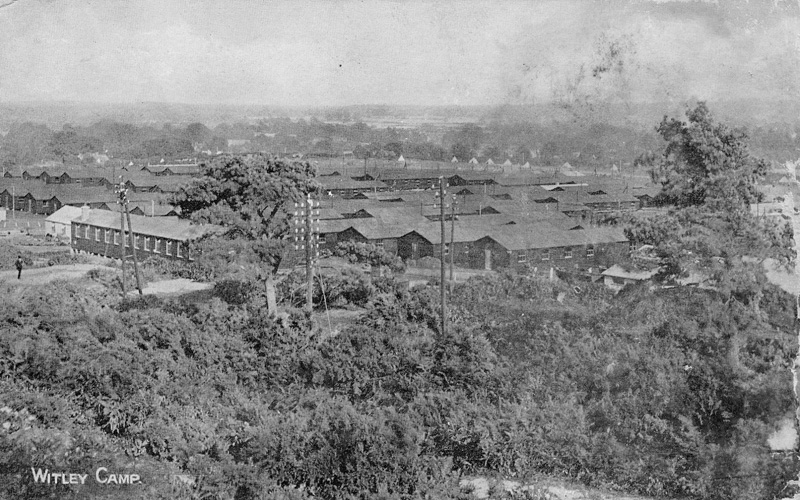
The 116th Battalion moved to Witley Camp in Surrey on 3 November 1916. Witley was the third of the three Canadian camps in the Aldershot area; Bordon and Bramshott were the others. Several other battalions also moved to Witley at about the same time, in anticipation of the formation of the new 5th Canadian Division. The 116th was now part of the 10th Canadian Training Brigade. This would be the 116th’s final training camp before moving to France.
Lieutenant Colonel Sharpe spent ten days in France during the autumn of 1916 as part of a group of nine Members of Parliament who had raised battalions. The party visited with the 1st, 2nd, and 3rd Canadian divisions for a day each. This inspection tour also included a day at the Somme and the remainder of the time visiting the hospitals at Etaples, Boulogne, and Le Harve. Sharpe wrote to the local newspapers and described the trip. He made a point of visiting several of the original 116th Battalion soldiers who had been sent in a draft to the 18th Battalion. Sharpe named many of these soldiers in his letter. He also spoke of other experiences, including being subjected to artillery fire on the Somme, riding in a tank, and dining with the Canadian Corps commander Lieutenant General Julian Byng and other generals.
Sharpe’s letter also detailed his thoughts upon returning to England. He felt the tour gave him a “splendid perspective of the great war, and the part Canada is playing.” Sharpe was “more determined to be no mere spectator” in the war and that he wished to be, “a real participant in a real man’s game.” Within a few months his wish would be granted and the experience of being under artillery fire would be routine.
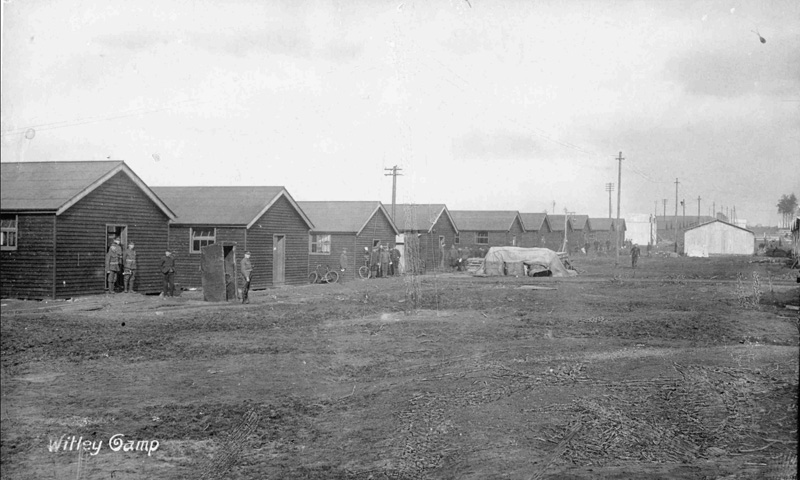
The first Christmas away from home was spent at Witley. Lieutenant Colonel Sharpe sponsored a contest for the best-decorated hut with the winning hut being awarded a prize of three British pounds and all other huts receiving one pound. Mrs. N. Beale of Toronto organized a drive to provide each man with a Christmas package consisting of socks, chocolate, candy, cigarettes and other treats. Christmas dinner was also served.
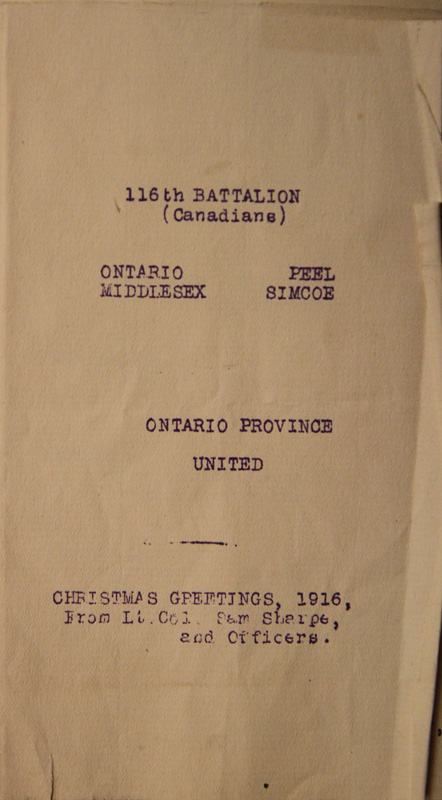
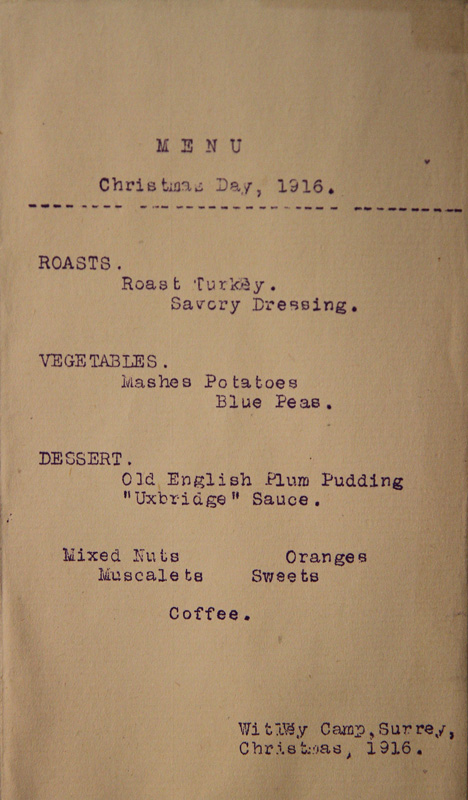


During a Battalion parade in the last week of December, Lieutenant-Colonel Sharpe shared the news that 116th had been warned to be prepared for the move to France. The commanding officer’s efforts to keep the Ontario County Battalion together had been successful. For more on how he accomplished this feat, see this article: https://tankmuseum.ca/blog-post/keeping-the-116th-battalion-together/
The 116th Battalion waited for the final order for the move to France. The preparations for the transfer will be covered in a future article.
Rod Henderson is the Regimental Historian of the Ontario Regiment. He served as a Sergeant in the Regiment and is the author of “Fidelis Et Paratus: A History of The Ontario Regiment (RCAC), 1866-2016”.