
Arriving in England
The 116th Battalion spent June and much of July 1916 at Camp Niagara, which was covered in the June 2026 article: https://tankmuseum.ca/blog-post/the-116th-battalion-at-camp-niagara/. They left Niagara on 20 July by train to Halifax, and travelled across the Atlantic on HM Troopship Olympic. It was an uneventful voyage and the ship docked at Liverpool at 08:00 on 31 July. The next leg was by train to Bordon Camp in Hampshire where they stayed only for a brief time. They were fortunate in that they were quartered in barracks while the other battalions that had travelled from Canada with them were in tents. Lieutenant Colonel Sharpe explained in a letter to the Uxbridge Times that this situation was thanks to “Col. Stewart of the 84th Battalion for this favor, as he kindly arranged this for the 116th”.
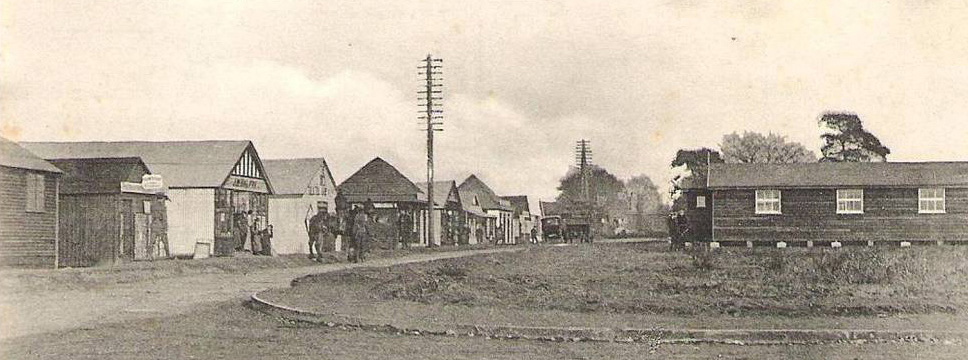
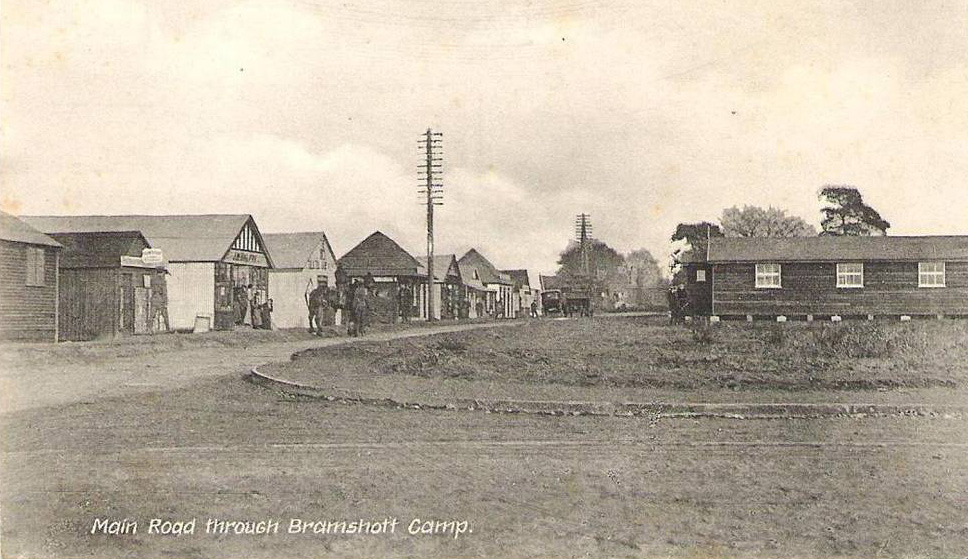
Around mid-August the 116th Battalion was relocated to Bramshott Military Camp, near Aldershot. This camp would be the home of the 116th Battalion for the next few months. Several Canadian battalions made the move to Bramshott after the 4th Division went to France.
All the soldiers were granted six-days leave in two groups soon after arriving in England. Most of the men went to London and letters home were printed in the local newspaper enthusiastically describing the sights of that city. For a young man from Ontario County in 1916 London would have been spectacular.
Training
The 116th Battalion was assigned to the 7th Canadian Training Brigade, to prepare the 116th for combat in France.
The surviving documents don’t describe the daily training syllabus in any detail. There were regular route marches with packs, rifle firing on the ranges, and visits to the practice trenches. In October an hour per week was scheduled for map reading and field sketching.
There was a constant flow of officers and men detailed to attend courses in such topics as field engineering, bombing (grenades), trench mortar, range finding, sniper, musketry, supply and transport, and anti-gas. Many of these courses were held at other camps around England.
Oddly, the prime reason for the 116th Battalion being in England is probably the least documented.
Deaths
Five members of the 116th Battalion died of various causes while in England. According to a letter written by Lieutenant Colonel Sharpe, there were about 15 cases of pneumonia in the Battalion.
Private Henry (Harry) James Haynes was born in Bristol, UK in 1878. He was married to Elizabeth and living in Oshawa while working as a labourer when he joined the 116th Battalion in December 1915. Haynes was admitted to the hospital in early August 1916 with pleurisy due to pneumonia. He passed away on 12 August 1916.

Private Wilbert Gordon Lunan was born in Toronto and was living there in February 1916 when he attested to the 116th Battalion. He would have been one of the younger soldiers in the Battalion, born in August 1898. Lunan was working as a clerk at this time, according to his attestation papers. A newspaper article claimed he was a silversmith who worked for the William Rogers Company. The same article refers to him as a corporal, but his service record only shows him as an acting lance corporal. The pneumonia appeared soon after arriving in England, causing him to be admitted to the hospital on 5 August. He succumbed to the infection on 21 August.
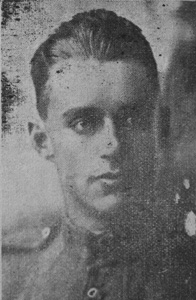
Lance Corporal Harry Thomas Newton contracted spinal meningitis on the ship and was hospitalized the day after arriving in England. His father and sister were able to travel to England to be with him. He died on 23 August. Newton was born in Saintfield, ON in 1897 and was living with his parents in Uxbridge when he attested to the 116th Battalion in November 1915. Some records indicate he was born in 1898, so it is possible that shaved a year off his age in order join the Canadian Expeditionary Force while under-age. His attestation papers list him as a student. Newton was the only one of the five deaths whose body was returned to Canada. He is buried in Uxbridge where a large military funeral was held for him.
Private John Lord Duxbury was the exception to the other deaths that summer; he drowned on 24 August at Arnside, north of Blackpool, England. Some records indicate the death as 1 September, but this was later corrected. His service record does not state it, but it would appear that he was on leave, visiting his parents who lived in nearby Grange-over-Sands. He was born east of this area in Nelson in 1890. An early member of the 116th, he joined in November 1915. Duxbury was working as a baker and living in Brechin, ON at the time.
Private Ernest Nelson Carrick was another young soldier who died from pneumonia. He was admitted to the hospital on 24 August and passed away on 8 September. Carrick was living with his parents on their farm in Washago, ON prior to joining the 182nd Battalion in April 1916. He was transferred to the 116th Battalion in July, during the time that Ontario County’s original battalion was working to bring itself up to full strength. He was born in Rama, ON in 1897. Carrick had two brothers in the 116th Battalion – John and Thomas.
Lieutenant Colonel Sharpe mentioned both Lunan and Newton in a letter to the Uxbridge Times. He and the Battalion’s chaplain, Honourary Captain John Garbutt, visited both soldiers while in hospital. Both officers, and others, attended the funerals that took place nearby the camps.
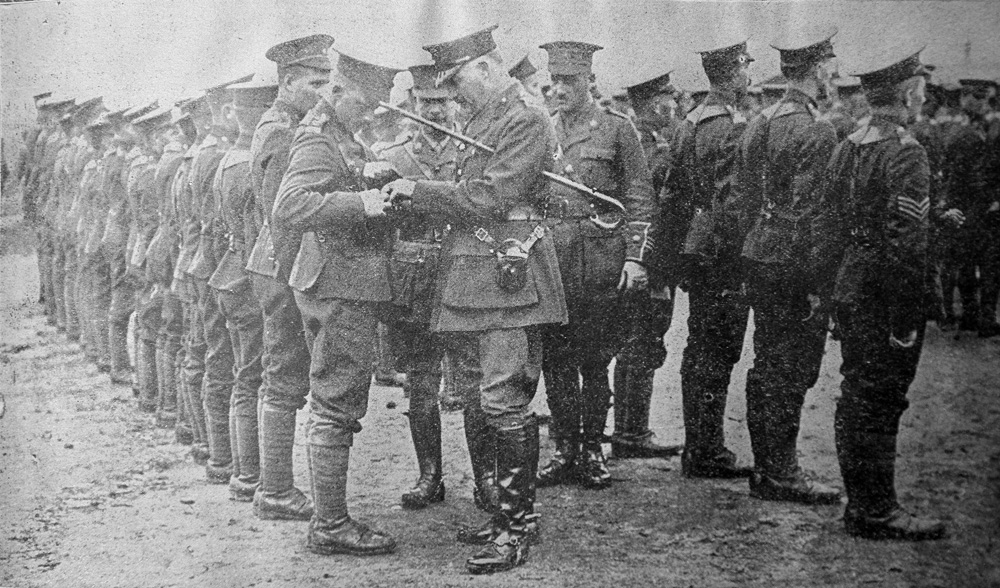
Inspection by Sir Hamar Greenwood
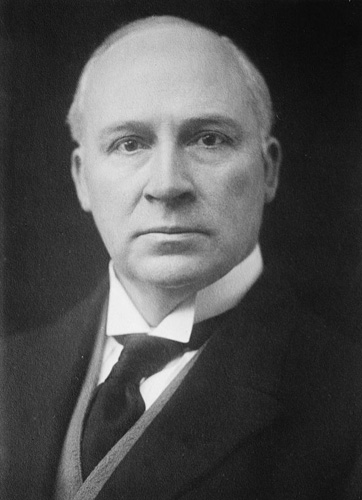
On 29 August the Battalion was inspected by Sir Hamar Greenwood and accompanied by Lady Greenwood. Sir Hamar had been born in Whitby and served as a lieutenant in the 34th Ontario Battalion of Infantry in the early 1890s. Lieutenant Colonel Sharpe and Sir Hamar were friends while law students at the University of Toronto legal program and as young officers in the 34th Ontario Battalion. Sir Hamar later emigrated to England, where he entered politics. At the time of the inspection he was a member of the British Parliament. He addressed the men of the 116th and reminded them that he was from the “good old town of Whitby.” The newspapers reported that Sir Hamar was pleased with the Battalion’s appearance and he declared that, “they are a vigorous, clean-cut, lot of fellows”.
Other Inspections
Inspections are always a significant part of military camp life and the friendly inspection by Sir Hamar Greenwood was not the only one. The Battalion was inspected by Major General David Watson, commander of the 4th Division, very soon after arriving at Bordon. This was quickly followed by an inspection by Minister of Militia and Defence Sir Sam Hughes. Later in August it was the turn of General Sir Archibald Hunter, commander of the Aldershot District.
Hughes made another inspection in late September, this time including all troops in camp. Sergeant Ernest Trower wrote to the Uxbridge Times that this inspection was not the usual ceremonial, cursory type that was normally conducted. This inspection required each battalion commanding officer to put his troops through a series of drills. Both Trower and Lieutenant Colonel Sharpe noted that Sir Sam Hughes stated that the 116th Battalion made the best showing.
More to come
Next month’s article will cover more of the 116th Battalion’s time in England.
Rod Henderson is the Regimental Historian of the Ontario Regiment. He served as a Sergeant in the Regiment and is the author of “Fidelis Et Paratus: A History of The Ontario Regiment (RCAC), 1866-2016”.