
The Canadian Militia was slow to get restarted after the First World War. The Militia regiments had essentially gone on hiatus during the war. There was no training during that period and they were only used to support recruiting for the Canadian Expeditionary Force.
This was the experience for the Ontario Regiment as well. The Ontarios remained functionally dormant in 1919, waiting for guidance from the Department of Militia. An organizational meeting of the senior officers was held in early 1920, but not much else took place that year. Training was restarted in 1921, but it was limited to nine days at the local level. This limitation continued for the next few years. In reality, it would appear that each soldier only trained for an average of six days annually in the early 1920s. The training pace picked up beginning in 1923. From 1923 to 1925 the Ontario Regiment held a three-day training camp at the Uxbridge rifle range over the Labour Day Weekend (see this article on the Uxbridge rifle range). The Regiment was also able to train for more days throughout the year.
It was in 1926 that the Ontarios really got re-established with a more recognizable and robust schedule of training and ceremonial events.
Key Regimental Appointments as of November 1926:
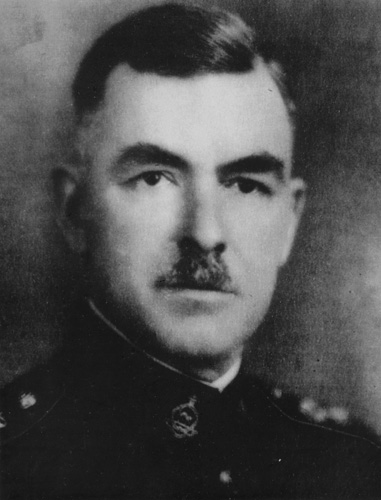
Commanding Officer: Lieutenant Colonel Frank Chappell
Second-in-Command: Major Herbert E. Smith
Adjutant: Captain Charles A. Mason
Paymaster: Captain Edwin Pearson
Medical Officer: Major James Moore
“A” Company Officer Commanding: Major Earle C. Hodgins
“B” Company Officer Commanding: Captain Arthur B. Harris
“C” Company Officer Commanding: Major Robert B. Smith
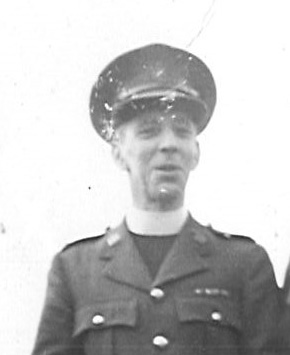
Chaplain: Honorary Captain The Reverend S.C. Jarrett
Regimental Sergeant-Major: Mark H. Cordy
The training year was divided into a spring session and a fall session, which began in mid-March and mid-September, respectively. First parade on training nights was at 7:45 or 8:00 pm on Friday evenings for “A” and “B” Companies in Oshawa. There were two periods of instruction each evening, ending at 10:00pm. The program for the trained soldiers typically covered such topics as the Lewis Gun, physical training, rifle drill, route marches, and squad drill. Regimental Sergeant-Major M.H. Cordy ran the recruit class.
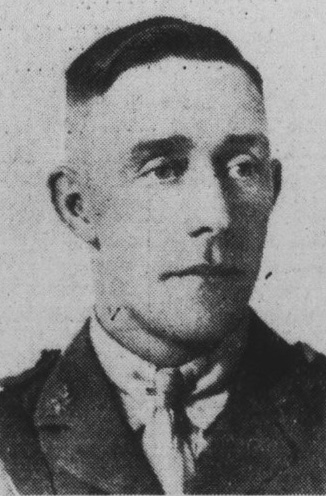
Sports were prominent in the Regiment’s training plan. A weekly gym class was initiated in September on Tuesday nights with boxing, basketball, floor hockey, and gymnastics on the schedule. The Regiment’s soldiers participated in intra-regimental and local leagues for badminton, bowling, and softball (indoor and outdoor). “C” Company hosted a Whitby sports meet in late August.
A new cap badge was authorized for the Ontario Regiment in July, which was covered in this article: 100 Years of the Cap Badge.
Recruitment levels increased through the early 1920s for “A” and “B” Companies in Oshawa. In mid-1926 Lieutenant Colonel Frank Chappell began raising “C” Company in Whitby. There were 29 soldiers signed up by late August. The Whitby Armoury would be the home of “C” Company. This building was fitted out by the Ontario Regiment in 1902 as Regimental Headquarters. It was used regularly until the start of the First World War, but largely fell into disuse as the Regiment suspended training during the conflict.
To support the new company renovations were undertaken at the Whitby Armoury beginning on 21 September under the supervision of the Canadian Engineers. Major work included the construction of a 20-yard rifle range the basement and club rooms for each of the junior ranks, senior NCOs, and officers. Other work included painting, electrical repairs, and improvements to the heating system. The renovations were completed by the end of September. Uniforms, rifles and other equipment soon arrived and “C” Company began training in early October. “C” Company was commanded by Major R.B. Smith and initially organized into three platoons.
The first brigade-level camp after the Great War was held at the Long Branch Rifle Range, west of Etobicoke, from 30 July to 2 August 1926. There were 112 members of the Regiment in attendance, along with the other three regiments of the 25th Infantry Brigade. The Regiment’s focus on sports and range work at Uxbridge paid off at Long Branch as the Ontario Regiment won the Brigade Challenge Cup for musketry and the Brigade Challenge Cup for sports. The Long Branch camp also featured Lewis gun practice at 200 yards, an inspection, and a church parade. “C” Company held their own camp at the Uxbridge Rifle Range in early September, despite not being uniformed or equipped.
The Ontario Regiment commemorated its 60th anniversary in the autumn of 1926. The highlight of the celebrations took place on Saturday, 13 November. That day was scheduled for Trooping the Colours, followed by depositing the Colours at St. George’s Memorial Church in Oshawa. With the Ontario Regiment now headquartered in Oshawa, it was felt that it was appropriate to place them at St. George’s permanently.
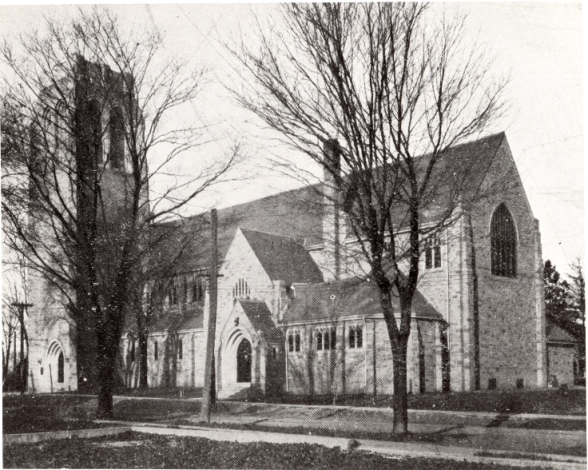
(The Thomas Bouckley Collection, The Robert McLaughlin Gallery, Oshawa)
There were five Colours on parade that day. The oldest were the combined King’s Colour and Regimental Colour presented in 1868. The next two oldest were a King’s Colour and a Regimental Colour that had been presented to the Regiment in 1895 by the citizens of Whitby. The most recent Colours were those of the 116th Battalion, received in 1916 and covered in this article: The County March.
After the completion of the Trooping the Colours at Alexandra Park, the Regiment marched past the saluting dais. Taking the salute were Colonel H.S. Cooper of the 25th Infantry Brigade, Honorary Lieutenant-Colonel R.S. McLaughlin and former commanding officer Lieutenant-Colonel J.F. Grierson. The Regiment then marched to St. George’s Memorial Church in downtown Oshawa for the depositing ceremony. The Colours were deposited on the altar by Honorary Captain S.C. Jarrett, the Regimental Chaplain, following the traditions of the ceremony. Finally, the Colour bearers hung the Colours on brackets on either side of the chancel. These five Colours remain displayed at St. George’s to this day.

Combined King’s Colour and Regimental Colour (1868), Regimental Colour (1895), King’s Colour (1895), 116th Battalion Regimental Colour (1916), 116th Battalion King’s Colour (1916)
The Ontario Regiment Band, under bandmaster Orville Ganton, was active throughout the year, performing at various functions in Ontario County. There were regular concerts in the winter at the Regent Theatre and weekly summer concerts at Alexandra Park.
The annual brigade inspection took place on 22 October. Remembrance Day was observed with participation by the Regiment at Memorial Park in downtown Oshawa.
Social events also filled the soldier’s time. The annual officers’ banquet was held in early January and was covered in detail by the Oshawa Daily Reformer. There were exchange visits between the Senior NCOs Mess and the Officers’ Mess with their counterparts in Toronto regiments. The 116th Battalion held its reunion at Toronto’s King Edward Hotel on 12 November. Many of the serving members of the Regiment would have also been 116th Battalion veterans. The annual Officers’ Ball closed out the training year on 10 December.
The pattern was now set for training program of the inter-war years.
Rod Henderson is the Regimental Historian of the Ontario Regiment. He served as a Sergeant in the Regiment and is the author of “Fidelis Et Paratus: A History of The Ontario Regiment (RCAC), 1866-2016”.