
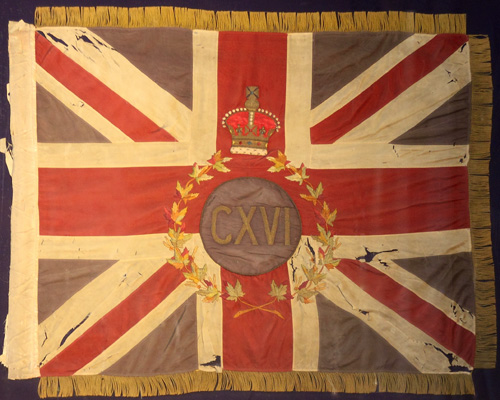
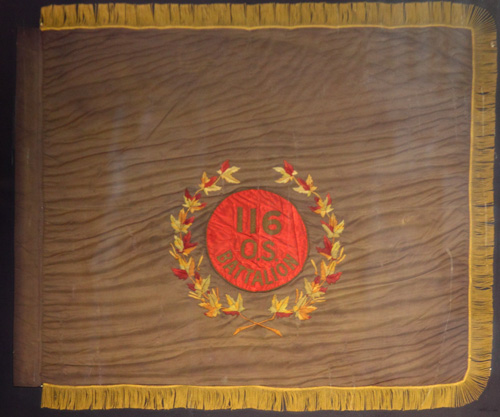
There is a long tradition in military units of the former British Empire of conducting a solemn ceremony to deposit a battalion’s colours in a church. The intent is to keep the colours safe until the battalion returns from battle. A King’s Colour and a Regimental Colour were presented to the 116th Battalion on 20 May 1916 by the Junior Relief Club of Uxbridge. Regimental Colours are essentially flags that carry great significance for the regiment. The King’s Colour is below, left. At right is the Regimental Colour.
After recruiting and training in Ontario County the 116th Battalion moved to Camp Niagara on 30 May 1916 (see this article: The 116th Battalion at Camp Niagara). The next phase of their training began when they arrived in England on 31 July 1916 (see this article: The 116th Battalion in England, Part 1 and The 116th Battalion in England, Part 2.
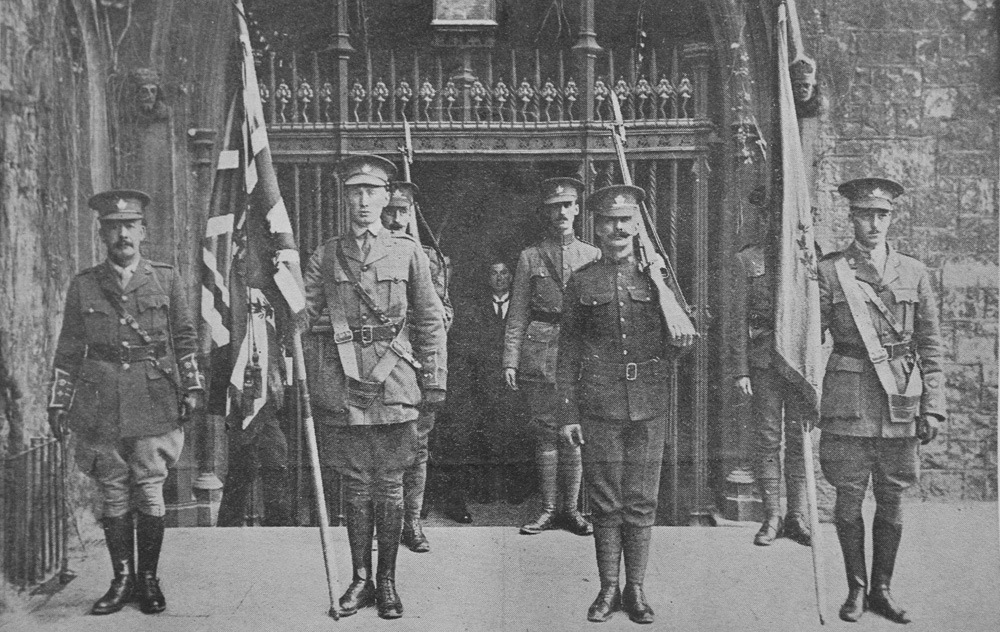
The 116th Battalion deposited its Colours in London’s Westminster Abbey on 7 October 1916. About 200 members, including both bands, the machine gun section, signalling section and the headquarters staff participated in the ceremony.
The Colour Party consisted of six men. Lieutenant Thomas W. Hutchinson and Lieutenant Morley R. Jacobi carried the Colours. The Colour escorts were Company Sergeant-Major William Hole, Sergeant Harry Abbotts, Battalion Sergeant-Major Fred Palmer and Sergeant George W. Robinson. Other officers involved in the ceremony were Lieutenant Colonel Samuel Sharpe, Major Robert Smith, Major Henry Cooke, Captain Arthur McConnell.
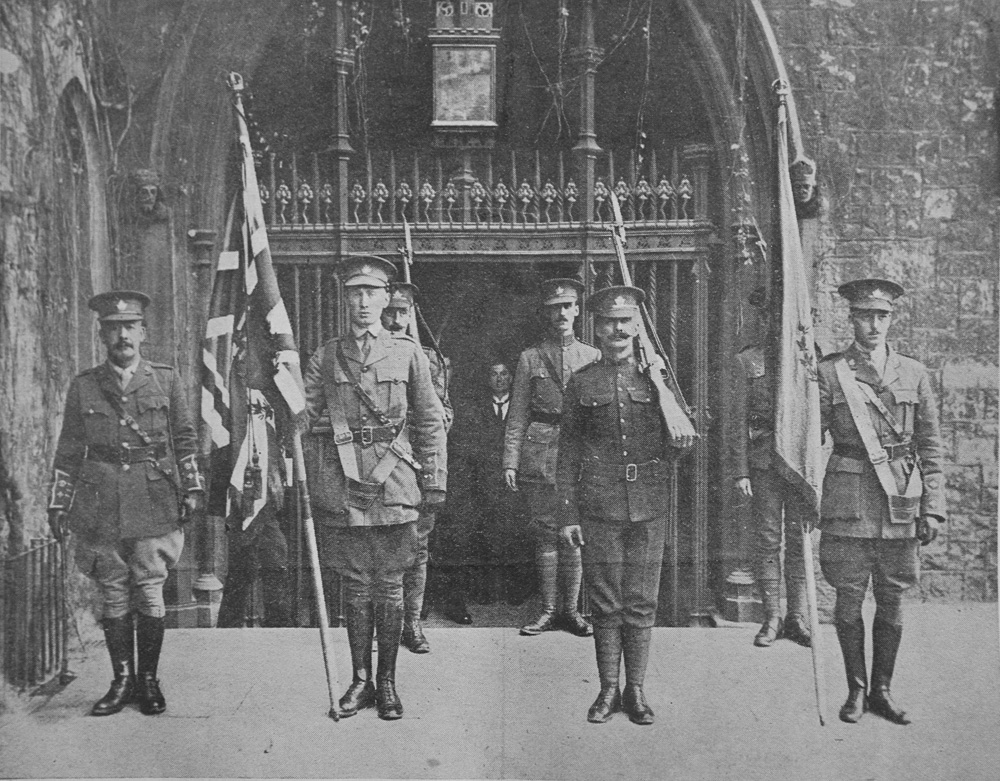
Front row: LCol Sam Sharpe, Lt Thomas Hutchison (holding the King’s Colour), CSM William Hole, Lt Morley Jacobi (holding the Regimental Colour)
Back: Sgt Harry Abbotts, RSM Fred Palmer, Sgt George W. Robinson
The Battalion travelled by special train from Witley Camp to Waterloo Station in London. The one-mile march to Westminster was led by the Battalion’s brass and bugle bands who played “John Peel” and other military tunes. According to a letter written by Lieutenant Colonel Sharpe that appeared in the Uxbridge Times, “…the people crowded to see the ceremony, and along the street there were cheering crowds.”
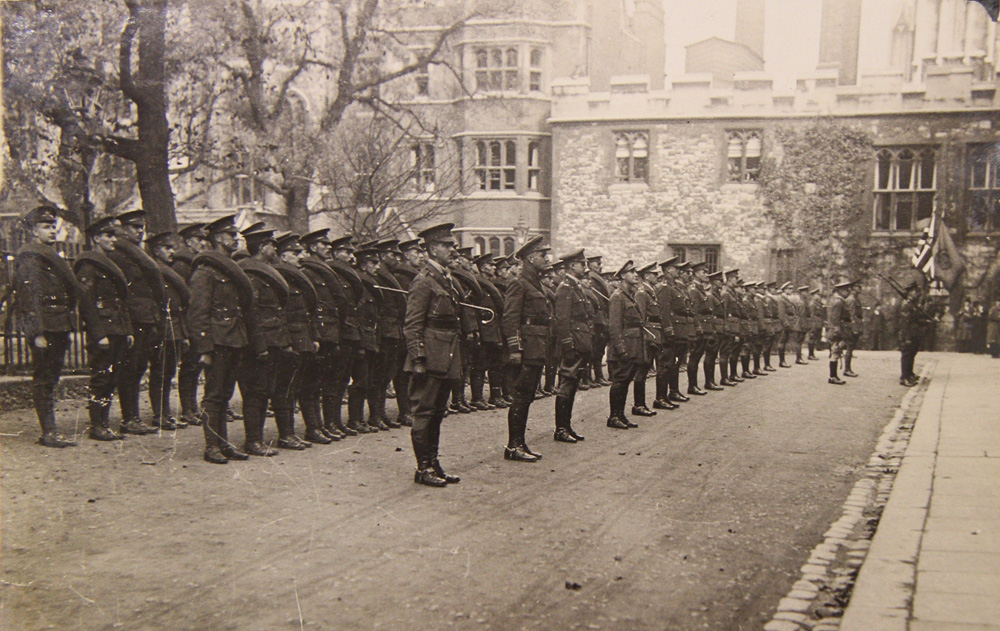
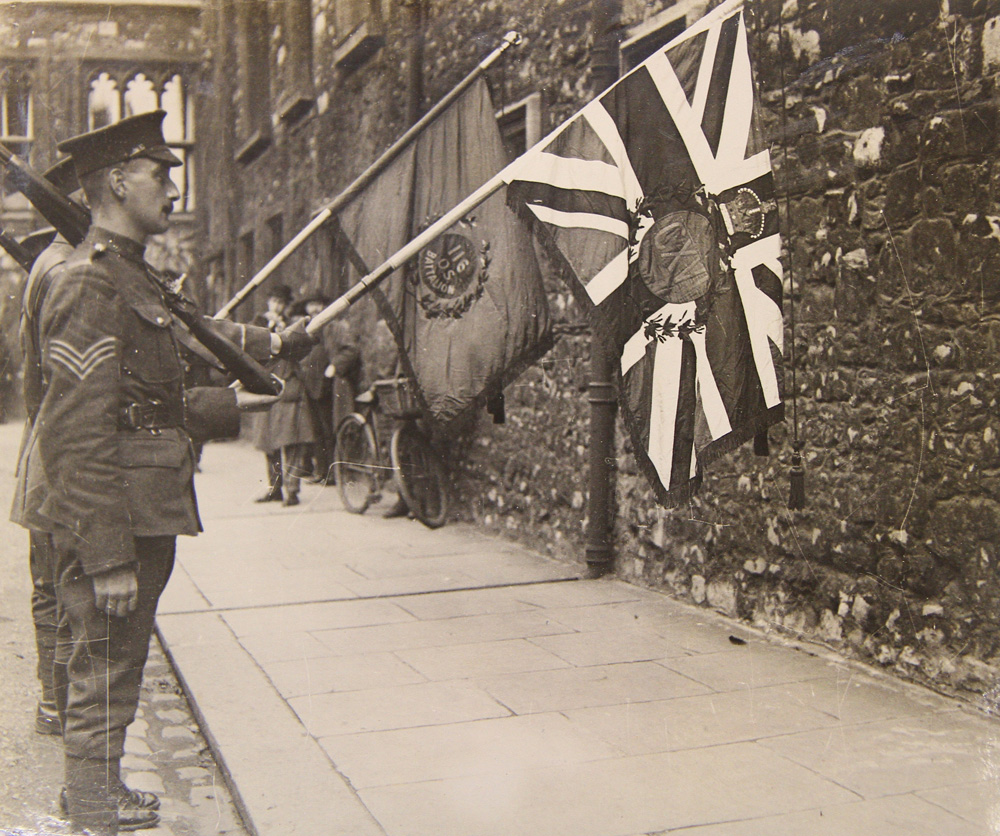
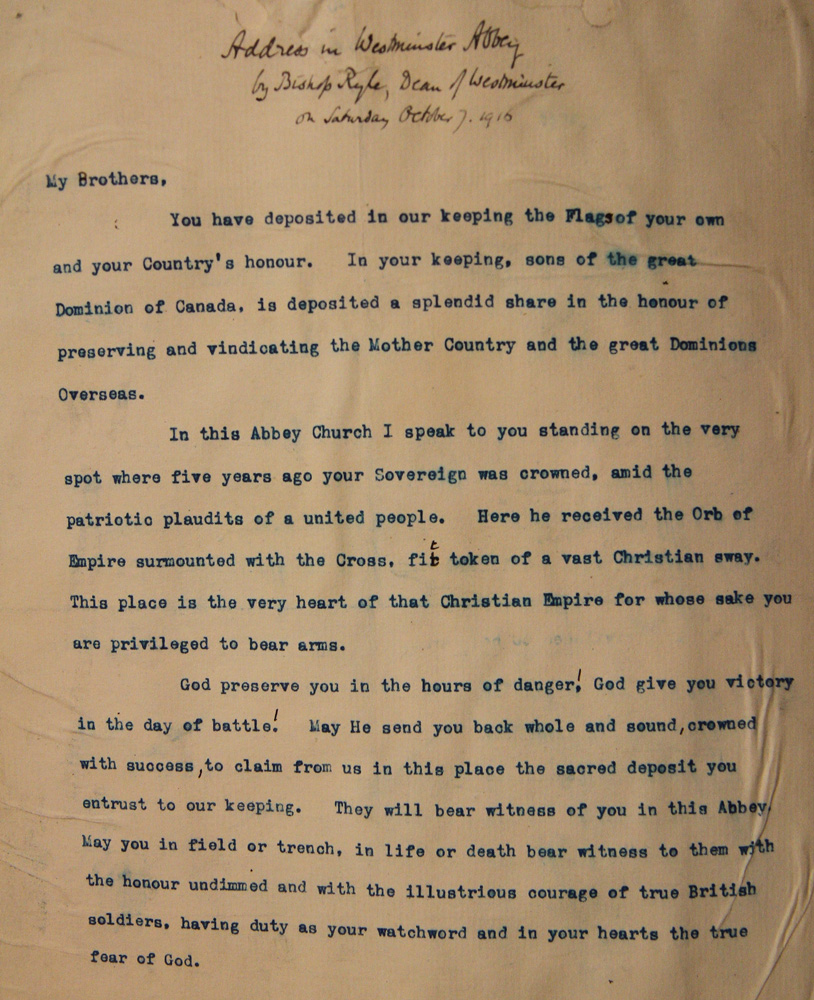
Upon arrival at Westminster, at about 10:00am, the Battalion briefly paraded in Dean’s Yard before moving inside the Abbey. The church service was led by the Dean of Westminster, Bishop Herbert Ryle. At the conclusion of the church service, Lieutenants Hutchison and Jacobi advanced to the high altar where the 116th Battalion’s Colours were passed to two clergy who then placed them upon General Wolfe’s monument, beside fourteen Colours, representing seven previous units of the Canadian Expeditionary Force. Bishop Ryle delivered the prayer of consecration and made a brief address to the attendees.
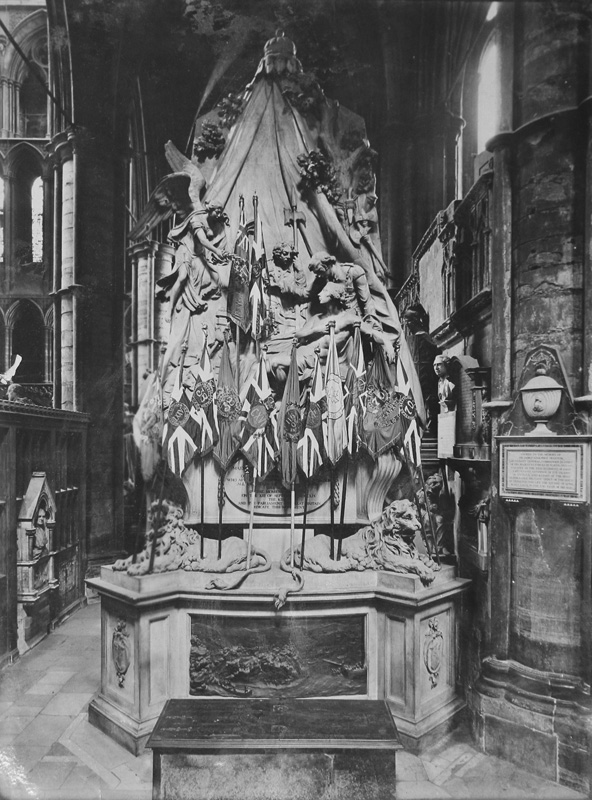
The ceremony was widely covered in the newspapers of London and other centres. It was not common to deposit battalion colours in Westminster. According to the Westminster Abbey website, only 17 Canadian units deposited Colours throughout the war. None of Lieutenant Colonel Sharpe’s letters ever explained how he was able to arrange such a feat.
This event was seen as an indication that the Battalion would remain as a unit and go to France in the near future.
Brief biographies of the some of the Colour Party have been covered in previous articles: BSM William Hole and BSM Fred Palmer.
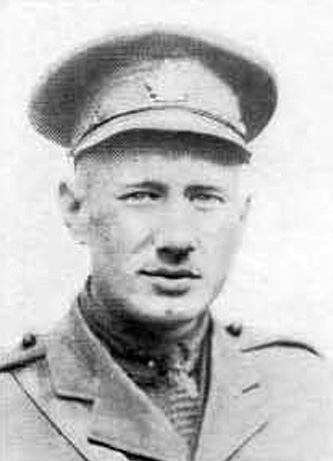
Lieutenant Thomas Hutchison was born in London, ON on 3 June 1890. He was living in Uxbridge and working as a banker when he joined the 116th Battalion in January 1916. Hutchison had previously served four years in the Cobourg Heavy Battery before the war. He was the Battalion’s machine gun officer. During the 116th Battalion’s time at Camp Niagara he married Muriel Vicars. Lieutenant Hutchison was wounded on 23 July 1917 during the Battalion raid near Avion and died two days later. He is buried at Ecoivres Military Cemetery in France.
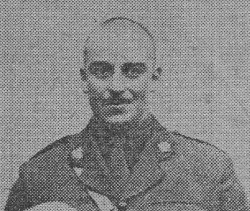
Lieutenant Morley Jacobi was born on 1 August 1894 in Oshawa. He was still living there, working as an accountant, at the time he joined the 116th Battalion in January 1916. Jacobi survived the war and returned to Oshawa where he became a prominent citizen in the 1920s and early 1930s, being a noted player and coach in both hockey and baseball. He was also well-known for his charity work. His civilian post-war civilian occupation was a life insurance underwriter for the North American Life Assurance Company. Unfortunately, he was killed in a car accident on 14 November 1934. Jacobi left behind his wife Lorine and son Morley Jr.
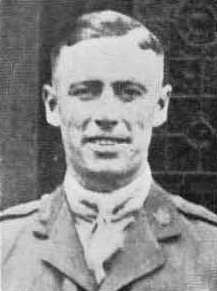
Sergeant George Robinson was born in Orillia, ON on 16 September 1897. His attestation paper indicates he was a student and living in Port Perry when he joined the 116th Battalion on 11 November 1915. He worked his way to Company Sergeant-Major during the war and received a commission in October 1918. Later that month he fell ill with diphtheria and was hospitalized on the 30th, passing away from the infection on 11 November.
Sergeant Harry Abbotts was born in Kingsteignton, England on 13 January 1889. He was married to Edith and living in Port Perry where he worked as a gamekeeper prior to the war. Abbotts joined the Battalion early its history, signing up on 11 October 1915 when Lieutenant Colonel Sharpe was recruiting the double company that was expanded to a full battalion. Little is known of his life after the war, but he lived until 1980.
Following the armistice, a Colour Party was dispatched to England to retrieve the Colours from Westminster Abbey on 22 November. The Colours were taken to France to remain with the Battalion until its return to Canada. There was considerable discussion regarding where the Colours should be placed after the war. They were initially deposited in Cannington. A ceremony took place in November 1926 to permanently hang the 116th Battalion Colours in St. George’s Anglican Memorial Church in Oshawa, ON, where they remain today.
Rod Henderson is the Regimental Historian of the Ontario Regiment. He served as a Sergeant in the Regiment and is the author of “Fidelis Et Paratus: A History of The Ontario Regiment (RCAC), 1866-2016”.